

D365 React to last-minute changes in production
In the dynamic landscape of modern manufacturing, agility is key to staying competitive. Companies must be prepared to handle sudden changes in production schedules — whether triggered by unexpected shop floor disruptions, evolving customer requirements, or supply chain challenges. The ability to adapt quickly ensures continuity and efficiency in an environment where last-minute adjustments are often unavoidable.
Unexpected changes—such as component substitutions or route modifications—can arise at the final stage of production planning. Managing these disruptions quickly and accurately is essential for maintaining productivity and customer satisfaction. With Dynamics 365 Supply Chain Management (SCM), manufacturers gain flexible solutions to adapt without compromising workflow.
Microsoft Dynamics 365 now offers enhanced flexibility, enabling changes to production orders even at the eleventh hour. New functionality allows manufacturers to modify components or production routes just before releasing orders to the shop floor, ensuring agile and efficient processes without the need to completely replan.
For businesses aiming to stay flexible in the face of unforeseen challenges, Dynamics 365 SCM introduces three innovative functions that show how sudden production changes are managed:
- Smart Decision Support:
Dynamics 365 leverages real-time insights and intelligent algorithms to evaluate multiple production scenarios and suggest optimal solutions, keeping processes agile and efficient.
- Optimized Resource Allocation:
The platform ensures machinery, labor, and materials are deployed effectively, preventing bottlenecks and overuse while maintaining production flow.
- Adaptive Scheduling:
Faced with unexpected changes, Dynamics 365 dynamically reorganizes production orders, recalibrating priorities to minimizing downtime and meeting delivery targets.
To support rapid adjustments, Dynamics 365 SCM provides several advanced capabilities that enable manufacturers to manage unexpected production changes effectively:
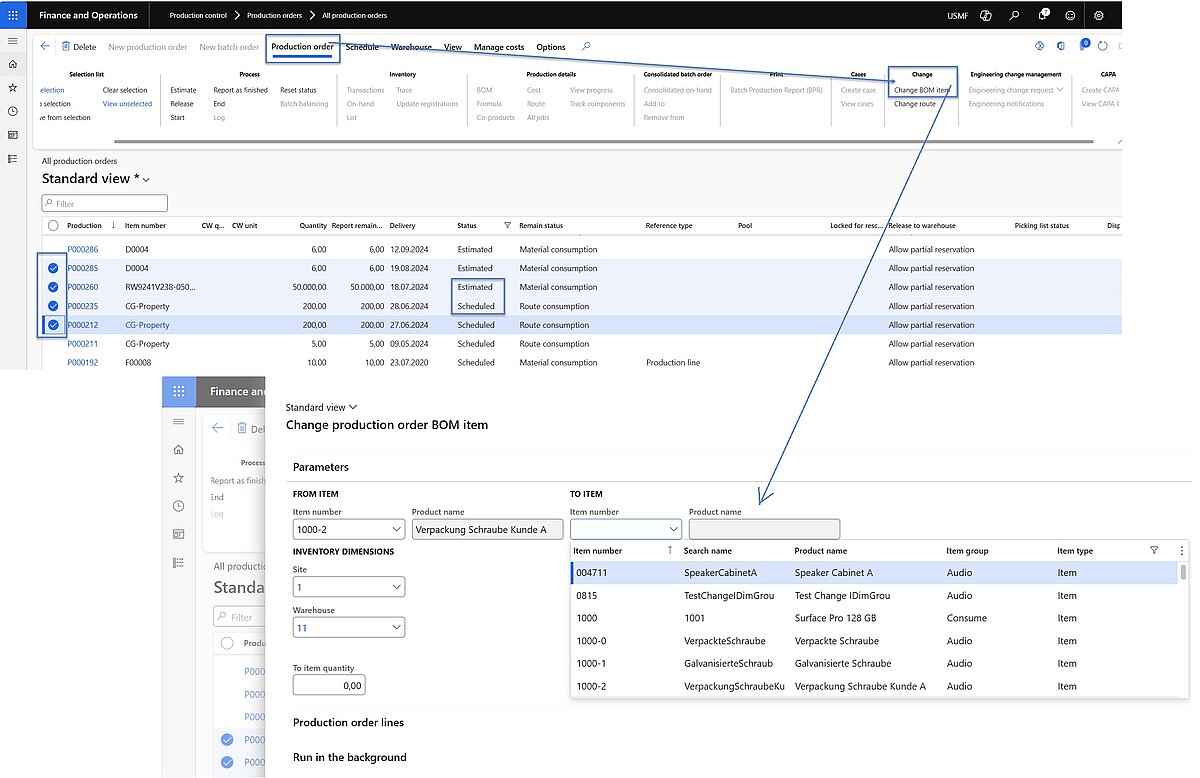
- Substitute components in the Bill of Materials (BOM) for one or more production orders that are in Estimated or Scheduled status:
Replace one item with another, adjusting quantities as needed, while maintaining inventory dimensions.
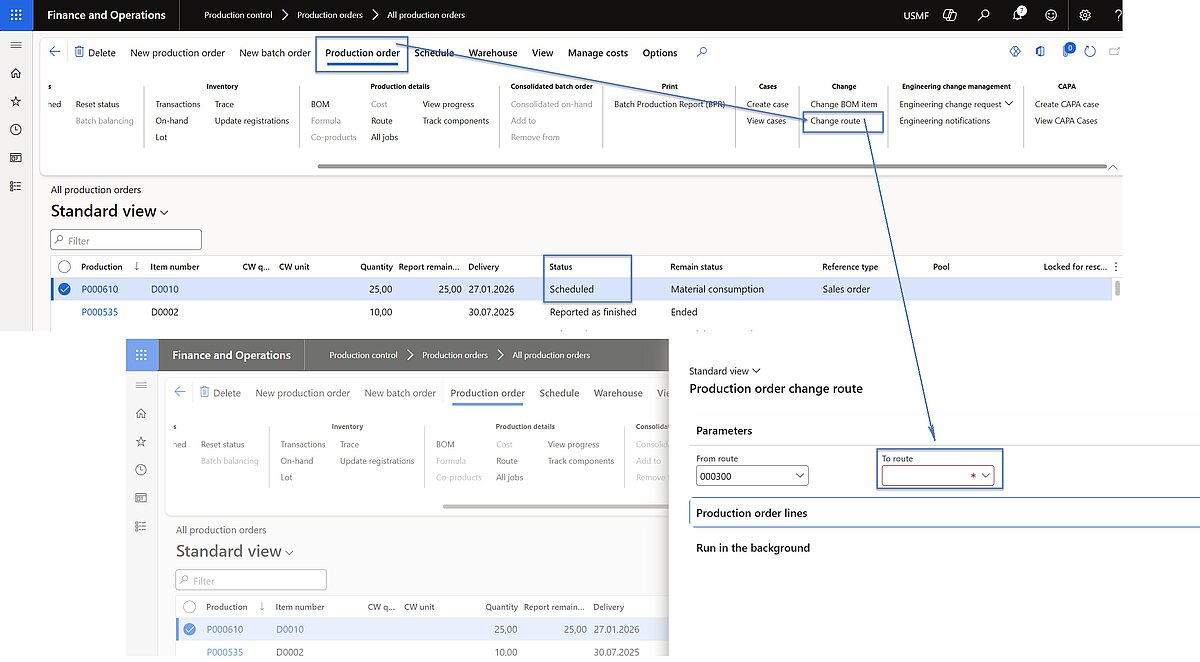
- Update routes on production orders:
Apply route changes across several scheduled orders to reflect updated setup, processing times, or resource requirements without disrupting the workflow.
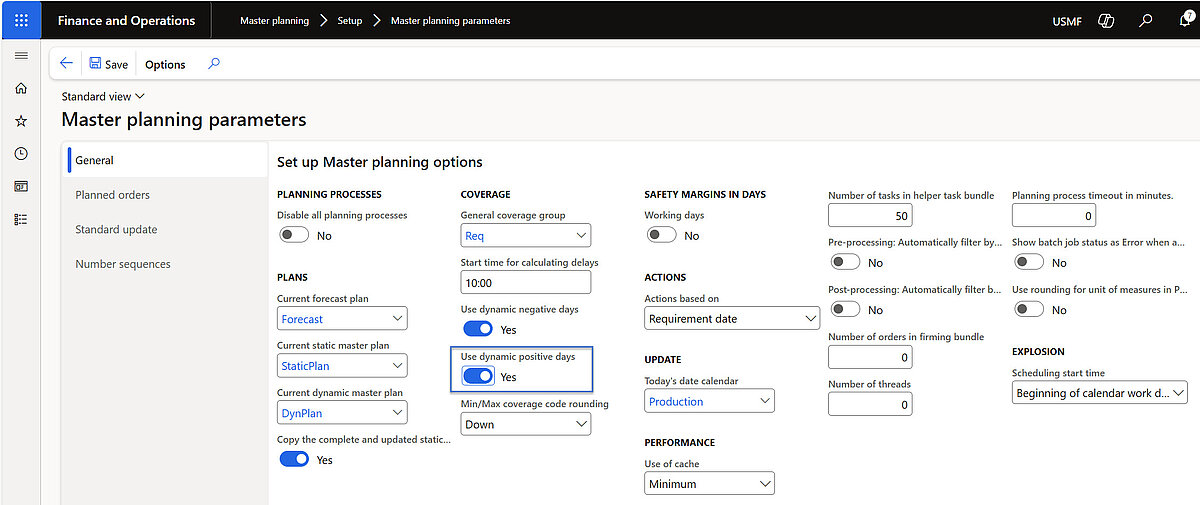
- Optimize with on-hand and planned inventory:
Increase responsiveness by combining available inventory with planned receipts for urgent orders. When demand falls outside the lead time, master planning suggests creating a new planned order but still uses existing supply for needs within the lead time. The Dynamic Positive Days parameter provides full control over this logic.
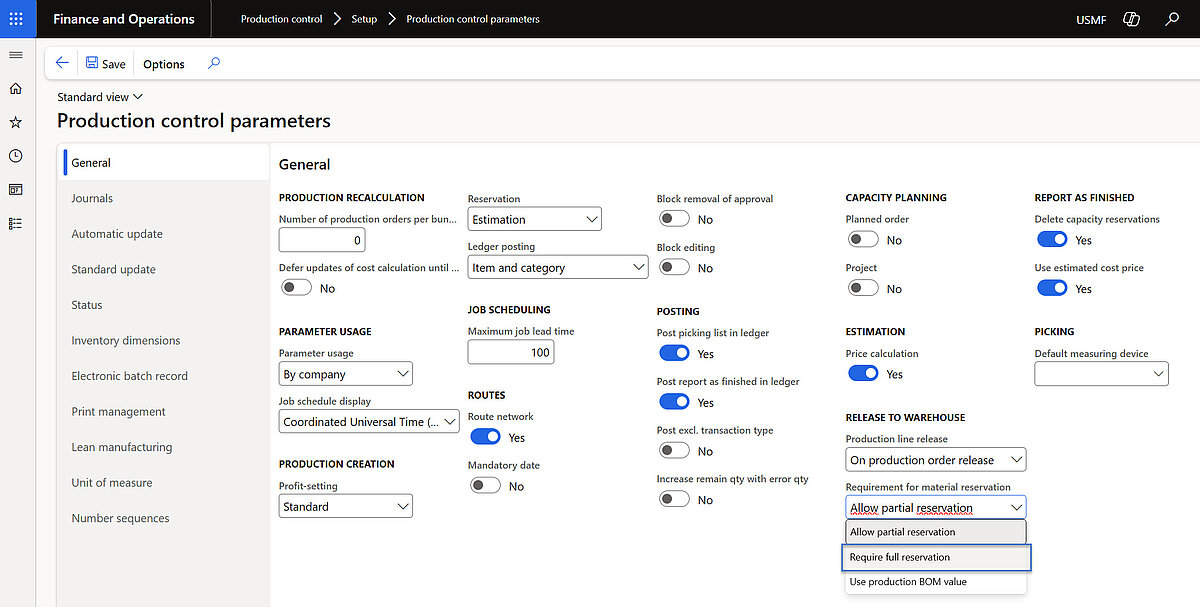
- Block warehouse release for incomplete material availability:
Stop production orders from being sent to the warehouse when full material reservation cannot be met, guaranteeing all items are ready before release.
- Create scheduling buffers:
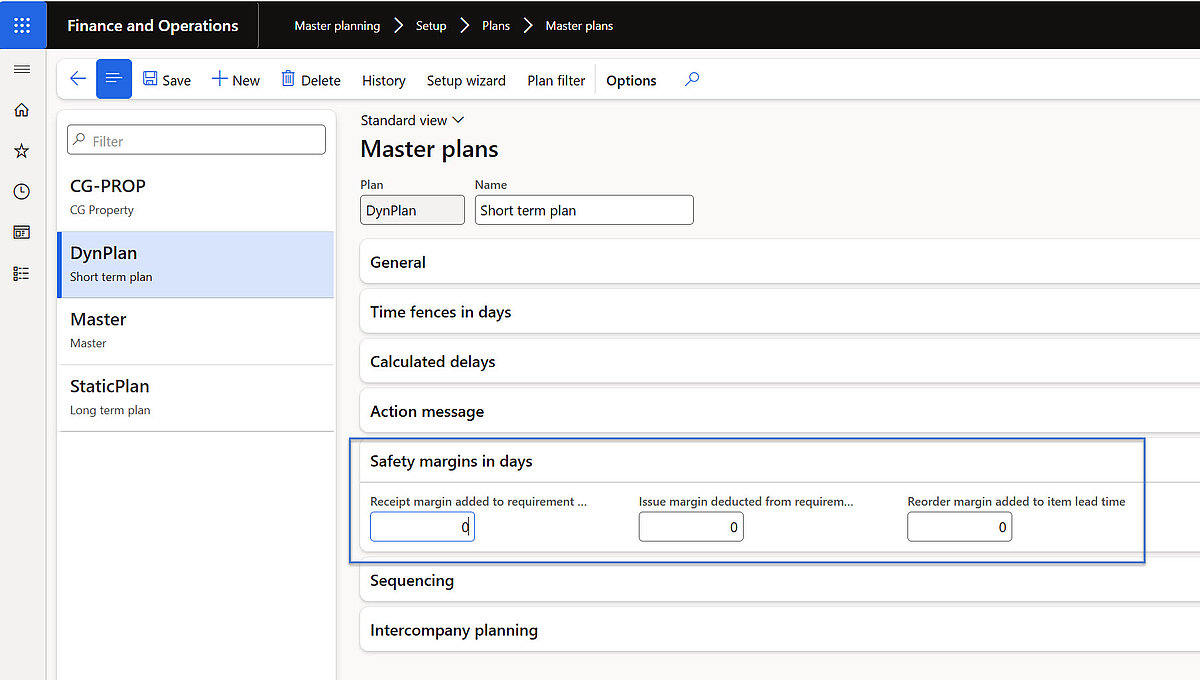
When rescheduling production orders, add issue, receipt, or reorder margins to provide extra time between tasks. This approach is ideal for complex or linked orders, reducing risk and supporting timely completion.
Prerequisites
- Microsoft Dynamics 365 Supply Chain Management version 10.0.38 or later.
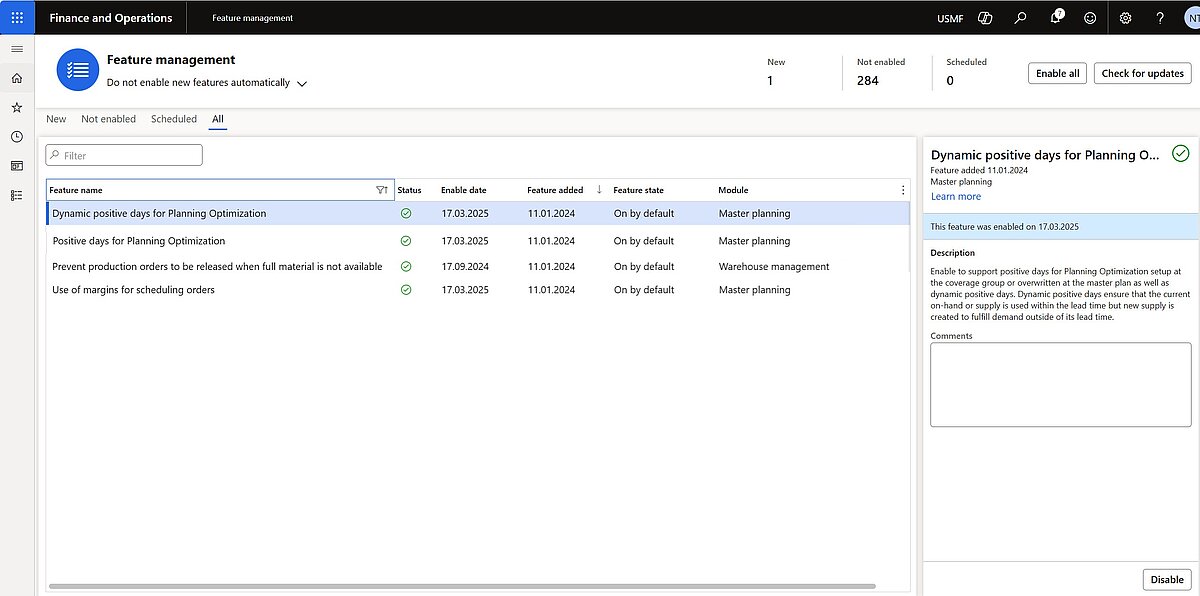
- These features must be turned on in Feature management:
- Dynamic positive days for Planning Optimization,
- Positive days for Planning Optimization,
- Prevent production orders to be released when full material is not available,
- Use of margins for scheduling orders.
Manufacturing is dynamic, and agility is key to staying ahead. With Dynamics 365 new functionalities organizations can react to sudden production changes seamlessly, maintaining control over complex and unpredictable situations. This functionality supports meeting customer demands, maximizing resource efficiency, and upholding operational standards. Adopting this feature sets the stage for long-term success in a rapidly evolving manufacturing world.